


Reading to learn: Comprehension and critical thinking
Hello and welcome to the very first edition!
In this edition, we are exploring what it really means to read deeply and think critically. Recognising that the skills behind great reading and confident mathematics overlap more than you might think, we’re also shining a light on brilliant maths CPD.
🎉 Prize draw winner: To kick things off on a celebratory note, we’re delighted to announce that Miss Jayne Maddison from Eastfield Primary Academy has won our first prize draw. We’ll be in touch with you soon to arrange your book bundle, Miss Maddison.
There’s more to come, and you could be next.
Welcome to the community - we're glad you're here.
Staffroom Story
Have you ever been outsmarted by your students?
"On World Book Day, I'd spent loads of my time putting together my Gangsta Granny costume. The kids came in - Hermiones, Wonkas, Where's Wally - and everyone was buzzing.
Then one boy walked in wearing his school uniform. I asked if he'd forgotten it was World Book Day. He looked at me very steadily and said, "I've come as Greg Heffley from Diary of a Wimpy Kid".
I’d spent hours on my costume. He hadn’t spent any time at all… and yet he’d cleverly found a simple way to find a relatable costume for the day better than most." - A Year 4 teacher
Think Deeper
Do students understand what they read to take it further?
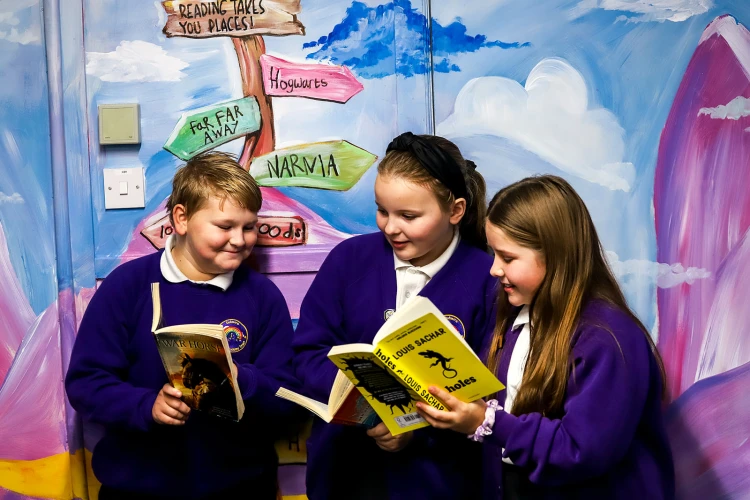
That clever moment is more than just funny - it’s a reminder that reading isn’t only about words on a page. As we reflect on it, the real question emerges. It’s no longer just can they read? It’s can they understand what they read and take that understanding into other areas of learning and, ultimately, life?
Genuine comprehension, inference and critical analysis are where literacy becomes a life skill. It’s fascinating to see how some students can use what they read so creatively, and as educators, we’re left wondering: How can we help this resonate with every child in our classroom?
So how do we unlock deeper understanding for all learners?
One powerful shift: focusing on how students think while they read.
Strong readers do not just decode. They actively think, question and make meaning as they read.
But for many students, that thinking is not automatic. It needs to be explicitly developed. Without it, reading can become passive, with eyes moving across the page but meaning not fully landing.
The challenge is not just getting students to read. It is helping them to engage, monitor and reflect as they do.
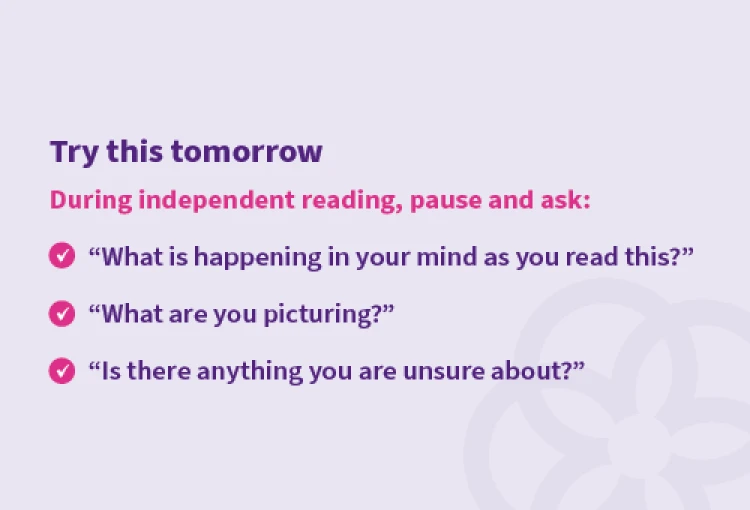
Try these small prompts to shift reading from something students do to something they actively think through.
And what if ‘reading’ isn’t limited to reading lessons?
Because the same story is playing out in maths
Charity and Sophie make it clear in their webinar that everything we know about deep comprehension in reading applies just as directly to mathematics.
We teach procedures, model methods, check answers - but are we creating enough moments for students to think?
Charity makes a powerful comparison. In literacy, we ask students what they think about what they've read and what connections they can make, extending thinking naturally. In maths, we often stop at the correct answer and miss the chance to go further.
So how can you extend thinking in maths?
Here are three ways to push further!
|
|
|
Industry news: Curriculum reform
What’s changing and why it matters now?

From knowledge to understanding: Skills for life
The government has confirmed its response to Professor Becky Francis's Curriculum and Assessment Review, setting out sweeping reforms aimed at equipping students with skills for life and work - not just examinations.
Why this matters: Schools will need to explicitly teach thinking, not just content.

Speaking, writing, thinking: Making understanding visible
Alongside this, the reforms introduce compulsory media literacy and critical thinking in primary, a new oracy framework and strengthened writing assessment at Year 6. The full curriculum will be implemented from September 2028.
Why this matters: Understanding will increasingly need to be spoken, written and articulated, not just known.

A new focus for Year 8: Tackling the "lost years"
Around 1 in 4 children who leave primary schools aren't proficient readers. To tackle this, the government is introducing a new statutory Year 8 reading assessment to identify gaps at this critical transition point - what the government has called the "lost years" at the start of secondary school.
Why this matters: Secondary schools will be held more accountable for closing reading gaps early.
Try this tomorrow
Two practical ideas you can use straight away
Poetry Alchemy: Plucking poems out of thin air - David Anderson (Pep the Poet)
This session from David Anderson (aka Pep the Poet) shares a four-step creative writing framework that works across all ages and abilities.
- Ask questions of your subject.
- Describe what you see.
- Give it a personality.
- Build a word bank.
While perfect for a poetry lessons, it works just as well any time you want students to slow down, explore ideas and develop richer understanding.

Free Year 6 SATs reading resources by Daisy Education
With SATs season approaching, these free resources focus on helping students understand, interpret and respond to texts in the tests with confidence.
The pack targets the domains that are heavily tested:
- Vocabulary in context (2a).
- Retrieving and recording information (2b).
- Inference (2d).
Each domain includes six lesson plans and 12 differentiated worksheets.
Share your story
Got an interesting story from your classroom?
Each month, we'd like to feature a real story from a real educator. It doesn't need to be polished or profound. If you've got something to share, send us your story - we'd love to include you in a future issue.

Hope you enjoyed reading the newsletter. We’ll be back next month with another edition packed with ideas, inspiration, and plenty more to support your classroom practice.
Until then,
The Staffroom Scoop Team at Daisy Education