


Lancashire school shares impact of maths intervention on SEND cohort and struggling students
Thess Jutla, Class Teacher at Ormskirk Secondary School in Lancashire, already used Daisy Education’s online reading development programme DreamBox Reading Plus before introducing the maths counterpart – DreamBox Maths.
With strong reading intervention provisions in place, conversations surrounding maths support arose when the school had a number of refugee children arrive who hadn't previously attended school and needed extra support.
After being in agreement that:
‘We need something exactly like DreamBox Reading Plus, but for maths.’
They discovered this programme did exist - DreamBox Maths.
After trialling the programme for free in the DreamBox Maths pilot, they are now looking to implement it with more students throughout the school.
Find out more as Thess describes how the hyper-adaptive online maths development programme is used as an intervention to meet the needs of their SEND and most in need students by filling gaps from primary, fixing misconceptions and facilitating a confident learning environment free from maths anxiety.
“We've had a really positive experience with DreamBox Maths - I'm really excited to see the effect when we implement it with more students. I try to be sceptical and analytical about things as much as possible, but we've had nothing but positivity.”
Addressing misconceptions and filling gaps
I love the fact that DreamBox Maths reads the problems out to them. It's really useful with children who have misconceptions or problems with the reading or understanding.
For example, one of our Year 8 students, an Afghan refugee, had a misconception surrounding ‘subtract one’. She thought the answer always had to equal one, which the programme has helped with. I can point to things on the screen and help to show her with the manipulatives.
It also really helps to identify gaps in knowledge. A main challenge we have is that children, even in Year 10, aren’t able to access the curriculum because they've got fundamental gaps from primary school.
You also might have somebody who's really successful in maths, but they've got some underlying gap that’s really hard to find.
Using DreamBox Maths helps to identify those gaps and push any student to progress from whatever their baseline is with enjoyable lessons.
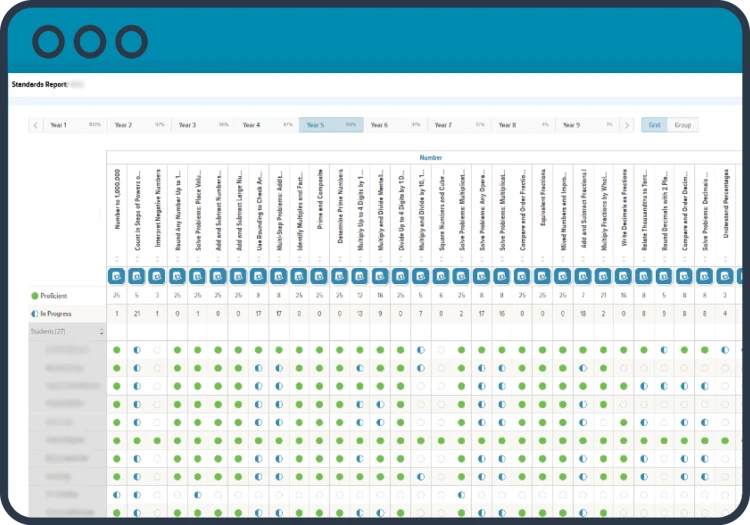
I can also access reports that highlight which domains students are proficient in and where their gaps are. It’s really interesting because I'm aware that many of these students are possibly dyslexic, which means they're probably better at problem solving, so seeing where the green dots in proficiency are and how their brains are working is fascinating.
Personalised learning for every student – while reducing teachers’ workload
The main challenge with interventions is human resources. There is only me running interventions in a school of 1,400 students. We do have TAs, but not enough to support all the children.
DreamBox Maths has helped meet the children's needs without all the additional teacher resources. The fact that the learning is personalised based on their proficiencies and gaps is great.
For example, we have this boy up to Year 6 level in algebra, but with big gaps in other things – like telling the time. The programme having no ceiling is really beneficial because you can praise children for the skills they are good at while they are still catching up on others.
Enabling success and achievement
As DreamBox Maths has students working at a level tailored to them, but doesn't provide them with any information about which year level they are working at, they can enjoy maths and gain confidence.
A boy excitedly told me, ‘Miss, I can tell the time. I couldn't tell the time yesterday. I can now.’ All of a sudden, it just clicked.
Someone else was thrilled because they completed lessons in a 30-minute session.
They love the fact that they have successes all the time, and they feel so good that they've achieved so much. That means they can't wait to come back to do more.
DreamBox Maths helps create that wheel of positivity and improvement.
Instilling mental resilience while reducing maths anxiety
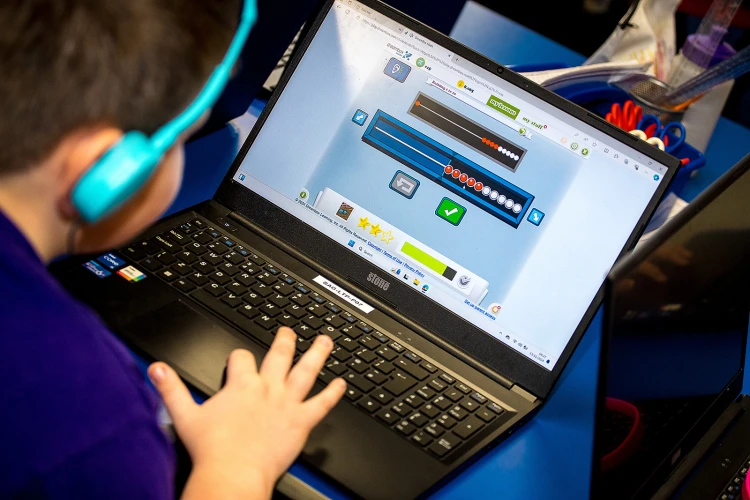
I very much support children to complete work independently - I'm not going to do it for you. So when they’re struggling on the programme, I say, ‘What else can you see? What else can you do?’ The programme is good with pictorial explanations and manipulatives to support this.
We've managed to build a resilience where they're not just going to look and say, ‘I can't do it,’ and because the stakes are so low with DreamBox Maths, they're not scared of getting things wrong. There’s often anxiety around that, but they always have a soft landing in the programme if they get something wrong, which is a really good growth mindset strategy.
Free pilot and programme pedagogy
We first tried DreamBox Maths using the free pilot. We had an initial meeting to discuss the programme and pilot process, which was really reassuring because it:
- Looked at the pedagogy behind the programme and how children learn.
- Explored what our children's needs are.
- Came from people who understood where we were coming from.
When we introduced the programme, we positioned it as if they were doing a job for me. We instructed them to tell me any problems they came across, what they liked and what they didn't like, because I needed to share this information with the programme developers. This engaged students as they felt really useful and ensured we got the feedback we needed.
Our next meeting with Daisy Education was training on how to use the programme effectively, which was really useful.
Simple implementation and management
During the pilot, we used it with our Year 7 and 8 students who were struggling the most – but having seen its effect, I’m excited to use it with our Year 9s and 10s who are reluctant to even go into a maths classroom, and I can see it working really well.
We quickly got the hang of fitting it into our timetables. I scheduled three 30-minute slots per week in the timetable system, In the register, teachers are alerted to who needs to be in maths intervention.
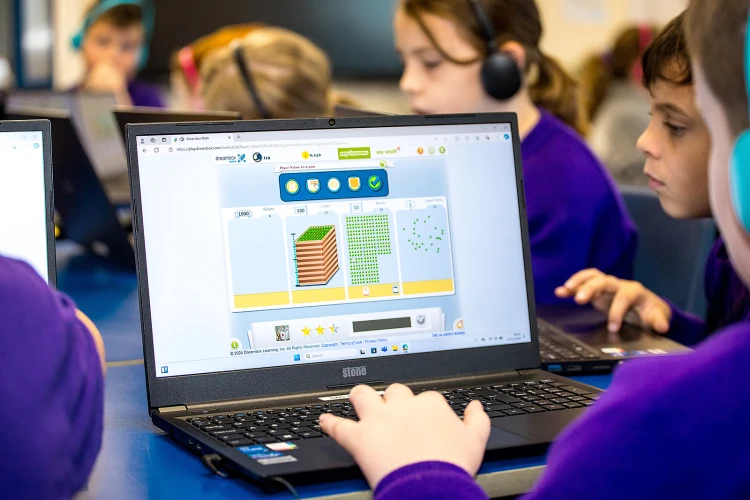
When they arrive, the children just sit down, put on their headphones and get on with it.
It's simple to supervise. When children are doing their maths intervention, I'm teaching phonics in the same room, while in a separate room, I've got an English language programme running. For one person to manage, it's been quite easy.
If somebody's got a problem, I can have a quick look at their screen and offer support at no great cost to my other responsibilities.
Book a brief introductory meeting online with one of our Maths Development Consultants to explore the advantages of DreamBox Maths for your school.
Call:
0191 389 6078