


Reading Plus content: Designing texts to build strong, confident readers
Behind every Reading Plus text is a deliberate process designed to do far more than simply provide students with something to read.
Each text is carefully developed to build fluency, deepen comprehension, expand vocabulary and, critically, keep students interested and enthused. This balance is achieved through collaboration between literacy specialists, educators and writers, all working from a shared understanding of how children learn to read and what motivates them to keep reading.
From topic selection to precise targeting of different reading abilities, each text is engineered with precision. While this may sound clinical, the process is equally creative. Writers shape and refine ideas into texts that feel engaging, authentic and memorable for students.
The aim is simple: to ensure every student encounters reading material that is challenging yet accessible, engaging yet purposeful, and consistently moves them on as a reader.
Developing the Reading Plus library
Reading Plus texts are developed through a collaborative, iterative process involving literacy specialists, educators and writers. Each plays a distinct role in shaping content that works in the classroom and beyond:
- Literacy specialists define the underlying framework, ensuring that texts align with established principles of reading development, particularly around fluency, comprehension and vocabulary progression.
- Educators contribute practical insight into how students interact with texts, highlighting where support is needed and what drives interest.
- Writers then bring this together, crafting content that is both purposeful and enjoyable to read.
This collaboration is ongoing. Texts are revisited and refined repeatedly to ensure they are not only technically accurate, but also effective and engaging in practice.

Creating Reading Plus texts
The process begins with identifying need. This may come from school feedback, reviews of the existing library, curriculum developments, insights from reading research or changes in the wider world that shape students’ experiences and interests. Each new text is designed to fulfil a clear purpose within a structured progression.
High-quality source material is selected, often drawn from Discovery Education’s vast content catalogue, and the text is carefully planned - defining the structure, level and intended learning outcomes of a new text from the outset.
An initial draft is then produced and reviewed against a range of criteria, including:
- Readability
- Vocabulary demand
- Sentence complexity
- Coherence
- Interest
Alignment with the target reading level is tightly controlled, with texts calibrated to defined parameters such as:
- Lexile level
- Word count
- Average word length
- Mean sentence length
Building the question sets
A corresponding set of comprehension questions is developed in parallel to ensure close alignment. These are guided by strict level-specific criteria governing number, type and assessment focus, drawing on up to nine question types and a bank of 22 skills, including:
- Inference
- Cause and effect
- Text structure
- Authorial intent
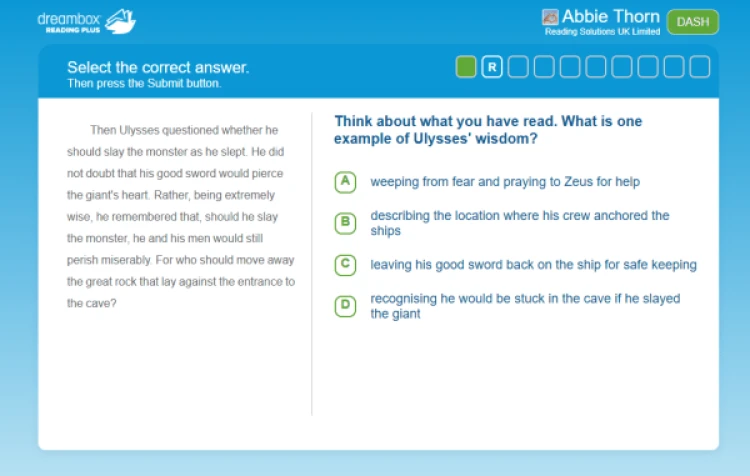
Vocabulary development is embedded throughout, with students encountering rich, tiered vocabulary in meaningful contexts. Repeated exposure across texts reinforces understanding and helps students build the vocabulary and background knowledge needed to access increasingly complex texts across subjects.
This is an iterative process. Texts and question sets are refined through multiple review cycles, ensuring that instructional design and readability work together to support progress.
This structured process provides the foundation for each Reading Plus text, but it is only part of the story. The sections that follow explore five key design principles that shape how texts are crafted to enthuse students and support reading development.

Choosing the right topics
Balancing interest with learning
Ensuring appropriate challenge across reading abilities
Supporting emerging readers
Ensuring diversity, representation and relevance
1. Choosing the right topics
Topic selection is guided by four key priorities:
- Relevance
- Variety
- Interest
- Educational value
Texts reflect students’ interests across a broad range of categories – such as Heroes and Trailblazers, Mystery and Adventure, Personal Journey and Our Earth – ensuring breadth in both content and perspective.
Texts reflect students’ interests across a broad range of categories – such as Heroes and Trailblazers, Mystery and Adventure, Personal Journey and Our Earth – ensuring breadth in both content and perspective.
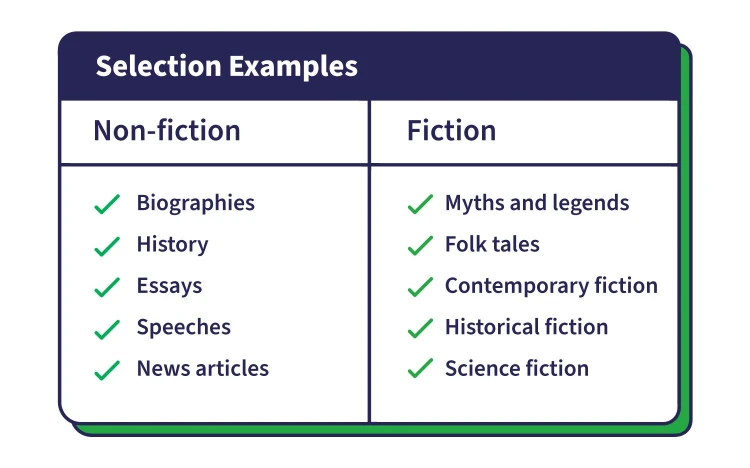
A deliberate balance is maintained between fiction and non-fiction, recognising the distinct role each plays in reading development. This breadth helps expose students to a range of text types, supporting the reading demands they encounter across the wider curriculum. Non-fiction builds background knowledge and subject-specific vocabulary, while fiction develops inference, empathy and understanding of narrative structure.
Cultural relevance and inclusivity are also central. Topics are chosen to reflect both familiar experiences and new, diverse perspectives, keeping students interested while broadening their understanding of the world.
2. Balancing interest with learning
Interest and learning are closely linked. If a text does not hold a student’s attention, its impact on comprehension and vocabulary is limited.
Writers use narrative techniques such as strong openings, clear structure and relatable contexts and characters to draw students in. At the same time, texts are designed to include rich but controlled vocabulary, varied sentence structures and opportunities for deeper thinking.
The goal is balance: texts that feel natural and enjoyable to read, while still supporting meaningful learning. When students are interested, they invest more effort, and that effort drives progress.
3. Ensuring appropriate challenge across reading abilities
Reading Plus texts are carefully calibrated to ensure that students encounter the right level of challenge at the right time. This involves adjusting multiple elements in combination, including sentence complexity, text structure, cohesion and conceptual demand.
A key principle is maintaining age-appropriate content. This is particularly important for older students reading below their chronological age, who need content that reflects their interests and maturity.
This helps schools support struggling readers without the loss of interest and motivation that can occur when they are asked to read content that feels too young for them.
One approach is to introduce complex ideas through accessible fiction at lower levels, before exploring them in greater depth through non-fiction at higher levels. A story inspired by the life of Louis Braille, for example, can introduce key ideas about his reading system in an engaging way, preparing students for a more detailed non-fiction exploration of the science behind it at a later stage.
The aim is to create productive challenge, stretching students without overwhelming them.
4. Supporting emerging readers
For many emerging readers, the challenge is not just developing skills but building confidence. Reading Plus content addresses both. Texts are designed to be accessible enough to enable success, while maintaining interest.
Clear structure, manageable length and supportive vocabulary reduce cognitive load, while engaging content sustains attention. Over time, this supports the development of stamina, confidence and independence.
Repeated success is key. As students make progress with texts that feel relevant and interesting, their confidence grows – and with it, their willingness to keep reading.
For many schools, building confidence is a crucial part of improving reading outcomes. Positive reading experiences can help reluctant or struggling readers develop a greater interest in reading and become more likely to choose to read independently, both in school and at home.
5. Ensuring diversity, representation and relevance
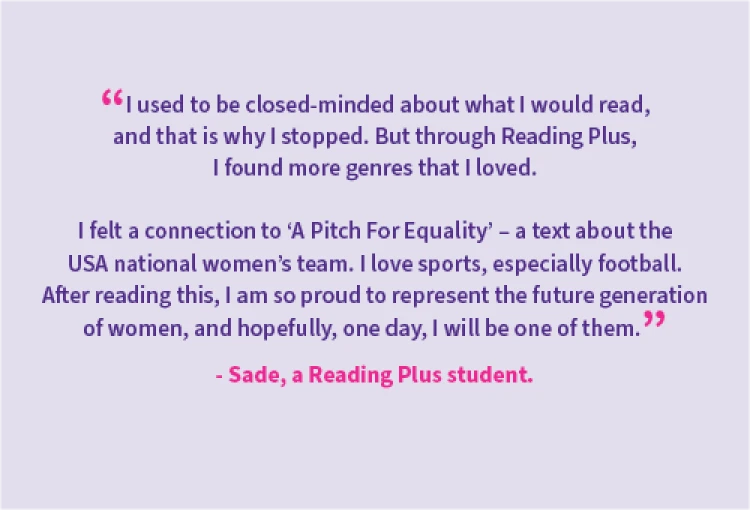
Diversity and representation are central to content development. Texts are planned, developed and written to reflect a wide range of cultures, perspectives, experiences and voices, allowing students to see themselves in what they read while also encountering new viewpoints.
Content is regularly reviewed to ensure it remains relevant to students’ lives and interests, with deliberate variation across themes, voices and text types.
This breadth helps maintain interest while also supporting wider educational goals, including cultural awareness and empathy.
Each Reading Plus text is the result of careful design, collaboration and refinement.
From identifying need and selecting topics to calibrating difficulty and shaping interest, every stage is intentional. Just as importantly, the process blends technical precision with creative writing to ensure texts feel relevant and meaningful for students.
The result is a library that goes beyond reading practice. By combining engaging texts with a structured progression of challenge, Reading Plus helps students develop fluency, comprehension, vocabulary, stamina and confidence, helping them become independent, motivated readers over time.
Speak to one of our Reading Development Consultants today to discover how Reading Plus can boost comprehension, fluency and vocabulary in your setting.