


Reading for pleasure: Ideas to inspire a summer of reading
With just days until schools break up for summer, staffrooms everywhere are deep in the final stretch of reports, transition days and end-of-year celebrations. It's a busy time, but it's also a chance to send students into the holidays with something they'll carry beyond the classroom: a new habit, a great book or an activity they'll want to return to in September.
In this issue, we've gathered practical ideas, holiday resources, the latest education updates and this month's staffroom poll to help you finish the year strong and start the next one with momentum.
🎉 This month's prize draw winner: Congratulations to Mrs Moore from St Philip's RC Primary School - a book bundle is on its way to your school!
Staffroom Story
“Can I put my writing journal on the shelf?"
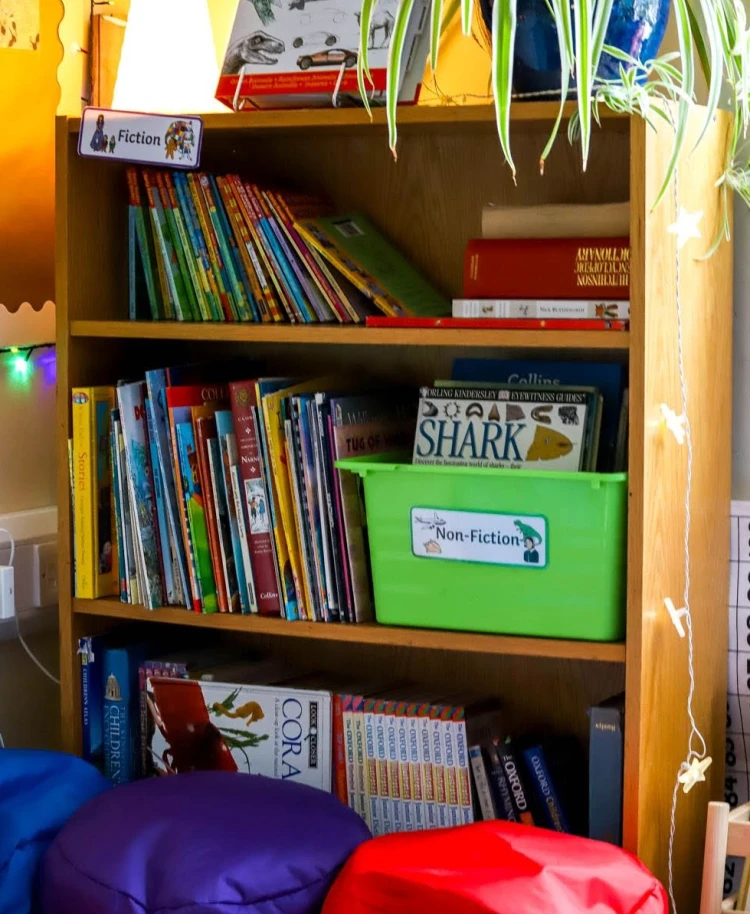
This edition’s story is from Jon Biddle who shared it at the International Reading Conference 2026, from his own Year 6 classroom. His reading recommendation shelf has been running for years - students take turns filling it with whatever they've loved. It's always been a two-way thing: they read, they recommend, other students borrow.
One day, a student approached him with an unexpected question: "Can I put my writing journal on the recommendation shelf? I think it's worth reading."
Biddle remembers being struck by her confidence. Surrounded by published authors, she saw her own poems and stories as equally worthy of an audience. He said “the fact that she was like, yeah, I want my work to be up there. I think it's worth reading. I thought that was absolutely fantastic.”
Once her journal appeared on the shelf, other students soon began adding their own writing too.
Think Deeper
For Biddle, that's the whole point of building a reading culture: it isn't only about finding the right book for a child.
Sometimes it's about a child already seeing themselves as a writer worth reading - and just needing somewhere to prove it.
So, what makes a reading culture stick?
The strongest reading cultures aren't built overnight. They're built through consistent, everyday moments that make reading part of school life.
Children's reading habits have changed dramatically over the past decade. Reading for pleasure is no longer just about getting lost in a novel - students now discover books through friends, gaming communities and online recommendations, and naturally move between different formats.
Graphic novels have been one of the biggest shifts, helping children explore complex themes, build confidence and see themselves as readers. In fact, National Literacy Trust research found that 59% of children who read graphic novels in their free time enjoy reading for pleasure, compared with just 33% of those who don't.
Magazines, comics, song lyrics, podcasts with transcripts and online news all play an important role too. By embracing these formats, schools can make reading more inclusive for SEND and EAL learners, reduce reading anxiety and foster a culture where reading is something children choose to do.
Watch Jon's full webinar to discover what schools with a strong reading culture do differently, and explore practical strategies, like the ones below, to help cultivate a lifelong love of reading.
Try this in your school to cultivate a love for reading
- Set up a pupil-led recommendation shelf and let pupils, not staff, choose what goes on it.
- Run a short reading identity survey at the start of the year - what do pupils enjoy, who do they talk to about books, what would get them reading more?
- Widen what “counts” as reading in classroom talk: graphic novels, magazines, podcasts and audiobooks all build the same skills as a novel.
- Pair confident and reluctant readers so recommendations travel both ways, not just from the keen readers.
- Send pupils into the holidays with something to read that they chose themselves, not something assigned.
What this looks like in maths
The same message emerged in maths too.
If reading flourishes when enjoyment is treated as an essential part of learning rather than a distraction from it, maths may need exactly the same rethink.
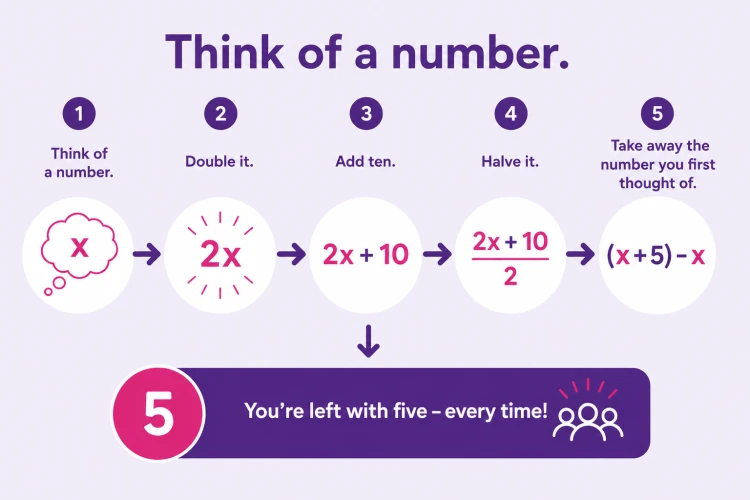
In Mathematical Magic and Mystery, Rob Eastaway argued that memorable maths lessons create one of two reactions: the "aha" of discovery or the "haha" of delight. The best lessons often create both.
Teachers know curiosity matters, but the curriculum rarely explicitly asks for it, so it gets treated as optional - the first thing dropped when time is tight. However, some ideas require no specialist equipment - nothing more than a pen, paper and five spare minutes.
Eastaway’s webinar is loaded with such classroom-tested tricks and puzzles that genuinely get students thinking like the following number game and more.
Try this in your classroom
- Open a lesson with a five-minute “wow” trick - a think-of-a-number routine or a card trick - before moving into the planned content.
- Frame problems as stories, not abstract questions: a puzzle about a swimming pool or buried treasure sticks far better than a worksheet.
- Introduce a simple strategy game to build tactical thinking without a right-or-wrong answer - Catchup, played with counters or building blocks, is a good starting point.
Industry news
Policy Updates For Schools
Government policy has started to catch up with what schools already know: pleasure and confidence in learning need dedicated investment, not just curriculum time. Here are three developments worth having on your radar.

The National Year of Reading 2026
The National Year of Reading 2026, led by the Department for Education and the National Literacy Trust, is a year-long campaign encouraging schools and families to #GoAllIn on reading through free resources, events, author activities and reading challenges.
Why it matters: Schools can tap into free resources and national events to promote reading for pleasure, enrich literacy provision and engage more students without additional cost.

£5 Million for Secondary School Library Books
The Government has announced £5 million for new secondary school library books. Every secondary school in England is expected to receive around £1,400 during the 2026/27 financial year to refresh library collections. Distribution details are yet to be confirmed.
Why it matters: School leaders and librarians can start planning priority book purchases now - refreshing collections with diverse, high-interest and curriculum-linked titles to boost reading engagement.

Every Primary School to Have a Library by 2029
The Government has committed to ensuring every primary school in England has a library or dedicated reading space by 2029. Around 1,700 schools currently without a library will receive support with books, furniture and training.
While the Government's funding route is still being developed, the National Literacy Trust has a ‘Libraries for Primaries’ programme where schools can register to get funding for setting up libraires.
Why it matters: Schools without a library can benefit from current and future funding opportunities.
Try this tomorrow
Summer Reading Bingo Challenge
Keep students reading this summer with our Summer Reading Challenge - a fun, low-pressure activity that encourages reading over the summer holidays without feeling like homework.
Students tick off a grid of mini reading challenges over the holidays, bingo-style. Perfect for sending home on the last day of term alongside a Summer Reading Challenge sign-up.
- Summer Bingo Challenge (KS2): Download challenge sheet
- Summer Bingo Challenge (KS3/4): Download challenge sheet
How to get involved - and be in with a change of winning!
All students who submit a resource activity (such as the bingo challenge, a video blog, or a book recommendation) will be entered into a prize draw! Five students will be chosen via a randomised prize draw to win a £50 voucher and a certificate. Find out more about our Summer Reading Challenge and how to get involved here.
Share your story
We want to hear from you
Each month we share real stories from real educators, and we'd love to hear your thoughts too.
This month's question: What's the biggest barrier to reading for pleasure at your school this summer?
- Screens and competing entertainment
- Lack of access to books or reading materials at home
- No time built into the school day
- Something else - tell us in your reply

We hope you've found something to take back to your classroom or into the holidays. We'll be back next month with more practical ideas, inspiration and classroom strategies.
Until then,
Staffroom Scoop Team, Daisy Education
Daisy Education supports over 1,700 schools and 350 multi-academy trusts across the UK with DreamBox Reading Plus and DreamBox Maths.