


Reading across the curriculum: what it takes to get every subject onside
August is a quieter month in schools with the summer break; it's also the month GCSE results arrive.
Alongside the celebrations, they'll spark familiar conversations about attainment, gaps and what can make the biggest difference for students next year.
One area that's often overlooked is reading beyond the English classroom.
Students don't always lose marks because they don't know the content. Sometimes they lose them because they can't confidently navigate a history source, interpret a science explanation or untangle a maths problem wrapped in layers of context.
In this edition of Staffroom Scoop, we're exploring what reading across the curriculum really looks like, why it matters from Key Stage 2 through to GCSE, and practical strategies that every teacher can take into the new academic year.
Staffroom Story
“Miss, I can tell the time"
A Year 8 student was struggling in maths, but the real challenge had started years earlier.
Small gaps in his understanding had quietly travelled with him from primary school. One of those gaps was telling the time.
He found it difficult to process the information in front of him and know where to begin.
His teacher introduced interventions using DreamBox Maths, an adaptive programme that meets students at their current understanding, presents the next right-sized step, again and again, each one small enough to actually land.
A few weeks later, he said: "Miss, I can tell the time. I couldn't tell the time yesterday. I can now."
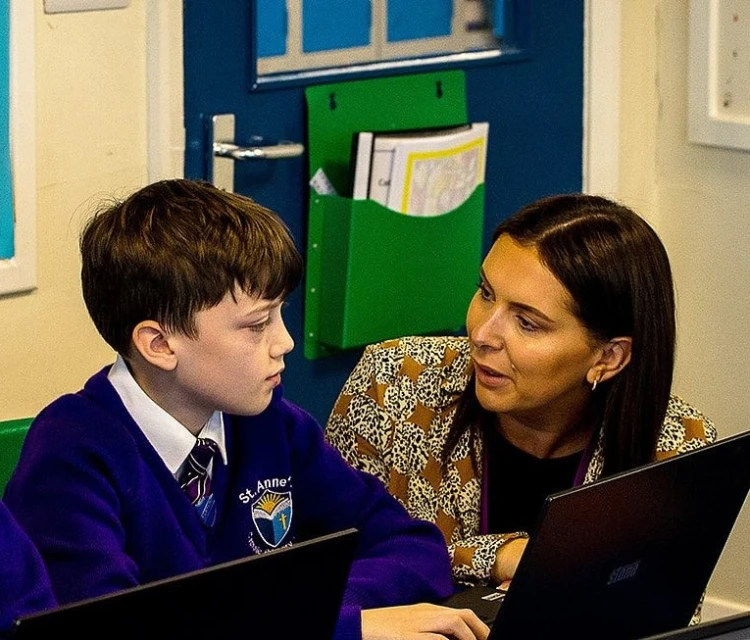
When students build secure foundations, they're better able to process instructions, interpret information and tackle unfamiliar problems with confidence.
Whether they're solving a maths question, analysing a history source or following a science method, the first step is making sense of the language in front of them.
That's why reading belongs in every classroom.
Think Deeper - Reading Across the Curriculum
By the time students reach GCSE, success depends on far more than subject knowledge.
Every exam paper asks them to decode instructions, navigate unfamiliar vocabulary and extract meaning from increasingly complex texts. When reading becomes a barrier, every subject feels harder.
That was the thread connecting two standout sessions at Daisy Education's International Reading Conference. Although approaching the issue from different perspectives, Emily Weston and Charity Lisco reached the same conclusion: reading is a whole-school responsibility.
Emily Weston: The Fluency Gap that follows students to GCSE
Emily Weston spent seven years teaching Year 6 before becoming a Key Stage 3 English Lead, giving her a unique view of what happens during the transition to secondary school.
In primary classrooms, reading is taught explicitly every day. Students spend dedicated time developing fluency, comprehension and vocabulary. Once they reach secondary school, however, those opportunities often disappear just as the demands of reading increase.
Students are suddenly expected to tackle longer texts, subject-specific vocabulary and more complex instructions across every lesson.
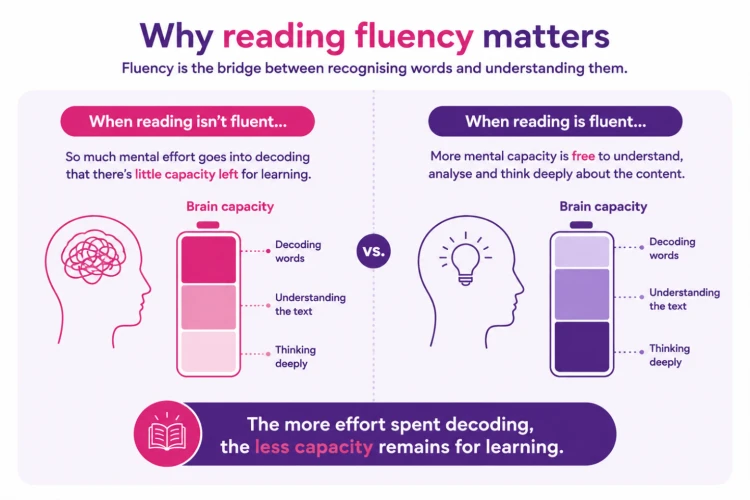
Emily describes fluency as the bridge between recognising words and understanding them. When reading isn't fluent, so much mental effort goes into decoding that there's little capacity left for thinking deeply about the content |
The consequences appear surprisingly quickly.
Emily shared data from one cohort where 24 students met the expected reading standard at the end of Key Stage 2. By Christmas of Year 7, only 10 were still working at that level.
By GCSE, the gap doesn't stay confined to English. Weston still remembers losing a GCSE PE grade over one unfamiliar word, “socioeconomic.” Art, drama, music, PE - all lean on reading more than students expect, and a student who can't access the text can't fully access the subject.
Practical ideas to take away
- Read a text once with no questions attached - pressure kills fluency before comprehension gets a chance.
- Share key vocabulary that unlocks understanding before the text, not after.
- Break longer texts into manageable sections to reduce cognitive load.
- Use audiobooks so students hear expression modelled well.
- Build five minutes of reading practice into every subject, not just English.
Charity Lisco: Why Science and STEM texts get switched off
If Emily focused on how students read, Charity Lisco, VP of curriculum at Discovery Education, challenged us to think differently about what they read.
She opened with a simple exercise:
Picture someone reading a novel...
Now picture someone reading a science article.
For many of us, the first image feels cosy and enjoyable, while the second feels serious and demanding.
Those assumptions don't just belong to adults. They often find their way into classrooms too.
That instinct is exactly what stops students choosing science and STEM texts for pleasure, and it's one teachers can pass on without ever meaning to.
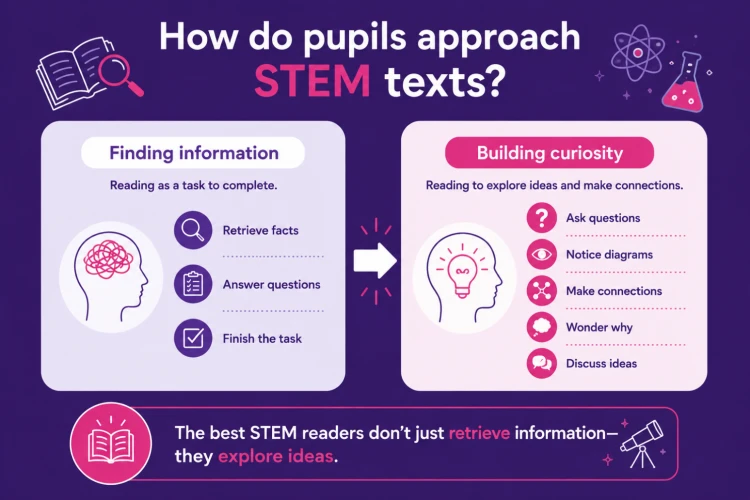
Reading lessons encourage students to predict, infer and empathise when reading fiction, yet non-fiction is frequently presented as something to retrieve information from rather than something to enjoy, question or wonder about.
Charity argued that science and STEM texts deserve the same curiosity we naturally bring to stories.
The evidence suggests students are already more interested than we sometimes assume.
|
For Charity, that's the real goal.
Reading shouldn't end with comprehension. It should inspire curiosity, critical thinking and agency.
How can you do that in your classroom?
- Explain why students are reading a text before they begin.
- Pause during reading to ask - "What does this remind you of?" or "Have you seen something like this before?"
- Teach diagrams, charts and graphs explicitly - starting with the title, labels and axes before interpreting the information.
- Show students how subheadings, diagrams and text features help them navigate complex information.
- Prioritise the vocabulary that unlocks understanding rather than trying to pre-teach every unfamiliar word.
Industry News
Year 8 Reading Assessment Takes Shape
What's new: The Department for Education has confirmed it is exploring a range of delivery models for the new statutory Year 8 reading assessment, which will focus on reading fluency and comprehension rather than content students can revise.
Why it matters: With the assessment still being developed, now is the time to strengthen reading across the curriculum - not just prepare for a test.
Unlocking Reading CPD for Secondary Schools
What's new: The new DfE-funded CPD programme launched in Jan 2026 is helping secondary schools strengthen reading fluency and embed evidence-based reading strategies across the curriculum.
Why it matters: Schools have access to practical training and resources to support reading in every subject.
GCSE Formula Sheets Remain Until 2027
What's new: Formula and equation sheets will continue to be provided for GCSE maths, physics and combined science, with greater emphasis on applying knowledge rather than memorising formulae.
Why it matters: As exam questions become more contextual, strong reading and comprehension skills are becoming increasingly important across STEM subjects.
Ready-to-Use
Library Audit Checklist
Sunday 9 August is National Book Lovers Day - a good excuse to look at your library shelves before students are back to fill them again.
Phoebe Demiger, librarian at the Centre for Literacy in Primary Education (CLPE), makes the case for treating a library as a living ecosystem: something to tend, weed and refresh, not just stock once and leave.
We've pulled together a short, practical checklist from her session, Building a Brilliant School Library, at the International Reading Conference - covering stock quality, representation, weeding and display, to help you review your library space before the new term starts.
Share your story
We want to hear from you!
Each month we share real stories from real educators, and we'd love to hear yours - whether it's a reading breakthrough, a lesson that finally clicked, or just something that made the staffroom laugh.

Hope you had a good read. The next month's theme is ‘Reading online: Digital Literacy and e-Reading Innovations’.
We’d love to hear your stories and ideas ahead of next month’s issue. Email us at staffroomscoop@daisyeducationuk.com.
Until then,
Staffroom Scoop Team, Daisy Education
Daisy Education supports over 1,700 schools and 350 multi-academy trusts across the UK with DreamBox Reading Plus and DreamBox Maths.