

Pupil premium funding: Evidencing impact with Reading Plus
What is pupil premium?
Pupil premium funding is an additional government funding stream provided to primary schools across the United Kingdom. Its purpose is to help schools support and assist disadvantaged children due to factors such as low household income or being in care. The funding aims to reduce the attainment gap and provide every child with the opportunity to reach their full potential.
How is pupil premium funding calculated?
The amount of pupil premium a school receives depends on the number of pupils eligible for free school meals, those who have been in the care of a local authority and children from families where parents serve in the armed forces. The funding allocation is reviewed and calculated each year. Pupil premium funding is allocated to local authorities based on the number of disadvantaged pupils.
How do I get pupil premium funding?
Pupil premium funding is allocated to eligible schools according to the number of:
Pupils currently receiving free school meals, or those who have been eligible at any point in the past six years, known as Ever 6 FSM.
Children who have previously been in the care of a local authority or another form of state care, including those adopted from care or from an equivalent system outside England and Wales.
Pupil premium is not provided as an individual allowance for each eligible child and schools are not required to spend the funding solely on pupils who meet the criteria. It may also be used:
To assist other pupils who have been identified as needing additional support, such as children who have, or have had, a social worker, or those who act as young carers.
For initiatives and interventions that involve the whole class, benefiting all pupils, including those who are not considered disadvantaged.
In addition, pupil premium funding is allocated to local authorities based on the number of:
Looked-after children under their care.
Pupils who meet the eligibility criteria and attend an independent setting where the local authority covers full tuition costs.
For children who are looked-after, the funding is managed by the local authority’s Virtual School Head (VSH) in partnership with the child’s school. Pupil premium funding must be spent on strategies that are intended to close the attainment gap.
How can pupil premium funding be used?
Quality Teaching: High-quality teaching is a top priority for pupil premium spending, according to the Education Endowment Foundation.
Additional Support: Targeted academic support through one-to-one sessions and small-group teaching to close learning gaps, promote faster progress and improve educational outcomes for eligible pupils.
Resources: Purchasing educational resources, books or equipment (such as Reading Plus) to help disadvantaged pupils make the most of their learning.
Enrichment Activities: Providing enrichment opportunities that broaden pupils’ experiences and support their personal and social growth.
As a company, Daisy Education is passionate about supporting disadvantaged children and schools to improve outcomes. If you are looking to purchase, or have already purchased, Reading Plus with pupil premium funding, the following information may help evidence your spending. We have used the EEF guide to the Pupil Premium as a reference.
The EEF guide outlines a four-step strategic approach school leaders might consider adopting:
- Diagnose your pupils' needs.
- Use strong evidence to support your strategy.
- Implement your strategy.
- Monitor and evaluate your strategy.
If you require any further information on evidencing impact, a member of our Customer Support Team will be happy to help.
Contact our Customer Support Team
Step 1: Diagnose your pupils' needs
'Gaining a thorough knowledge of your disadvantaged pupils' levels of attainment is the first step in developing an effective pupil premium strategy.' – The EEF guide to the Pupil Premium.
The built-in Reading Plus adaptive assessment, InSight, is a fast and effective way to determine pupils' academic standing. This diagnostic assessment data highlights which pupils need comprehension, vocabulary and/or silent reading rate development support. Pupils independently sit this assessment when they start on the programme.
Based on this assessment data, Reading Plus customises instruction for every pupil by placing them at their just-right level. It then dynamically adapts to a pupil's performance based on formative assessments, which will help a proficient reader succeed and continue to be challenged.

Teachers can quickly identify pupils needing additional support and in what particular reading skill. The programme provides reading development intervention materials (PDFs, worksheets and lesson plans).
The InSight Assessment also measures pupils' motivation and self-confidence in reading, which is then supported by core components.
The core components of Reading Plus teach children the skills they need to read with comprehension as they are exposed to word-reading skills (decoding, full word recognition, fluency) and language comprehension (inferring, text structure and vocabulary) in line with the 'reading comprehension house' found within the EEF Improving Literacy in KS2: Guidance Report.
Step 2: Use strong evidence to support your strategy
'School leaders must also utilise a broad array of external evidence to inform their decision making, alongside the expert knowledge they have of the pupils in their care.' – The EEF guide to the Pupil Premium.
Evidence that supports this approach
Reading Plus is an online evidence-based adaptive reading development programme that improves pupils' fluency, comprehension and vocabulary. The programme includes independent online activities, teacher-led instruction and data-driven progress monitoring reports.
Reading Plus accelerates pupils' reading gains, closes the reading gap, encourages reluctant readers and improves reading for pleasure.
Reading Plus aligns with research by EEF, which states:
- It is important to identify the appropriate level of text difficulty, to provide appropriate context to practise the skills, desire to engage with the text and enough challenge to improve reading comprehension.
- Effective diagnosis of reading difficulties is important in identifying possible solutions, particularly for older struggling readers. Pupils can struggle with decoding words, understanding the language structure, or understanding particular vocabulary, which may be subject-specific.
- There are some indications that digital technology approaches can be successful in improving reading comprehension, particularly when they focus on applying and practising specific strategies and using self-questioning skills.
- Evidence suggests that reading comprehension approaches need to be tailored to pupils' current reading capabilities, so it is important that teachers receive professional development in effective diagnosis as well as training in the use of particular techniques and materials.
Step 3: Implement your strategy
'Successful implementation of a pupil premium strategy is a carefully staged process that takes time, rather than being a one-off event. The strategy needs to be aligned with other school development plans and existing practices to ensure a sustained impact.' – The EEF guide to the Pupil Premium.
When schools purchase Reading Plus, they are appointed a dedicated Reading Development Consultant who works with the school to provide a bespoke implementation plan. A structured, in-depth training plan is then rolled out class by class or year group by year group, depending on the school's context. This is usually several short sessions with specific and measurable objectives.

The first training session with staff is a CPD session explaining the programme's pedagogy, an overview of how to get started and basic data interpretation training. The second training session with staff covers usage, formative progress, rewarding success and bespoke support based on pupil data. We then provide any ad hoc support required.
The school is then handed over to our Customer Support Team, who offer free, unlimited training and support via a school's preferred communication style. For sustainability, the team:
- Provide administrative support to ensure a seamless implementation.
- Perform monthly support checks to ensure our customers' accounts run smoothly and identify areas that may impact pupil progression.
- Run termly competitions and provide ideas to encourage usage, increase motivation and ensure schools fully utilise their licence.
Pupils can access Reading Plus from home as it is available on various devices. To engage parents and carers in the education and progress of their child, they can view the 'Families' tab on the programme, which gives an overview of what Reading Plus is and how they can be supportive.
Step 4: Monitor and evaluate your strategy
'School leaders must continually monitor the progress of the pupil premium strategy, adapting their approach when and where appropriate.
School leaders will likely consider the following:
- How to provide flexible and motivating leadership as challenges emerge.
- What training or follow-on support is required for staff beyond initial training.
- How to respond to implementation data to tailor and improve approaches.
An effective pupil premium strategy requires goal setting, underpinned by short, medium and long-term outcomes needed to reach those goals.' – The EEF guide to the Pupil Premium.
The extensive summative and formative assessment data available on Reading Plus allows educators to monitor the progress of every pupil premium-eligible child frequently.
Teachers can see through the various reports if a pupil's progress slows, allowing for interventions to be rapidly implemented.
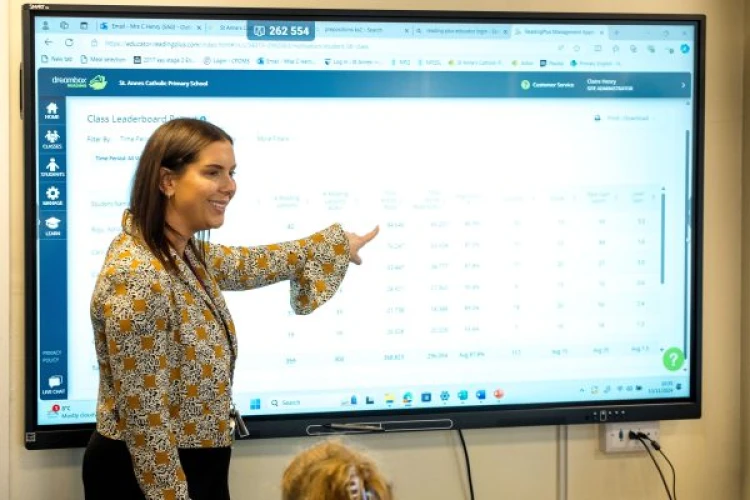
Reports available on Reading Plus:
- The Screening Report groups pupils by instructional needs to determine which needs comprehension, vocabulary and/or silent reading rate development support. Teachers can easily understand their pupils' unique needs by reviewing their personalised diagnostic profiles.
- The Placement & Schedule Report displays the most appropriate programme components for instruction, the initial placement level within each component and weekly assignment recommendations for each component.
- The InSight Assessment can be re-administered twice to provide valuable benchmarking for mid-year and end-of-year reading improvement. The Benchmark Report helps teachers monitor pupils' progress and determine how Reading Plus usage impacts growth.
- The Projected Growth Report predicts student growth over time based on pupils' assessment results and progress throughout the year. The report enables educators to identify pupils on track to reach their end-of-year goals and inform decisions about how to support pupils at risk of not reaching their goals.
Teachers use this data to inform reading strategies and the curriculum. They also use it to hold Reading Plus and/or pupil premium leads accountable. Our Customer Support Team can provide progress reports to provide evidence to school governors or MAT leads.
Closing the attainment gap for disadvantaged pupils with Reading Plus
Daisy Education collaborated with Derby Research School and Spencer Academies Trust to determine the efficacy of Reading Plus and its impact on disadvantaged pupils.
Summary of results
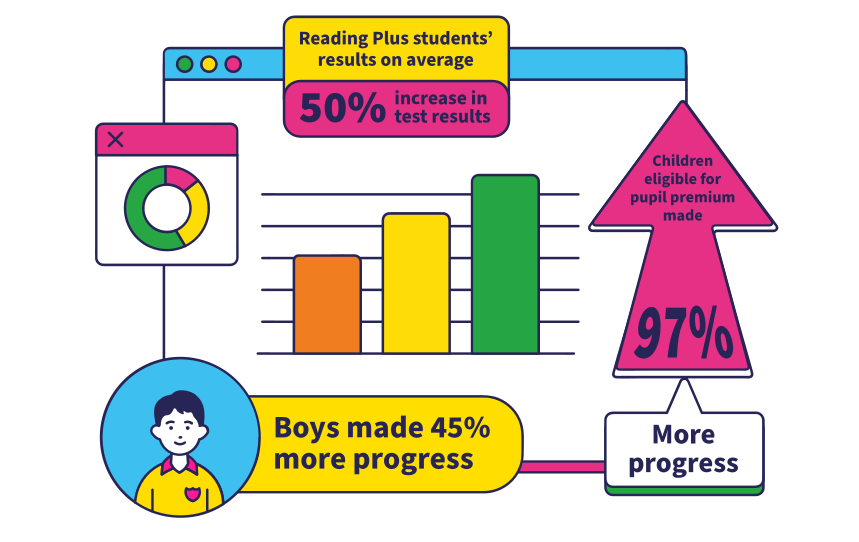
Children eligible for pupil premium using Reading Plus made 96% more progress than those in the control schools.
Average test scores for the children eligible for pupil premium in the control schools increased by 22% from the first (September 2021) to the final SATs test (May 2022). Average test scores for those pupils using Reading Plus increased by 68% during the same period.
How does Reading Plus support pupils eligible for pupil premium?
- Pupils are exposed to new and challenging vocabulary.
- The extensive content library of over 1,300 engaging informational, fiction and non-fiction texts expands pupils’ interests and awareness of the world.
- Pupil knowledge is developed, opening access to the curriculum.
- Pupils have their own personal libraries, as Reading Plus can be accessed from home.